Gas vs Electric Dryer: Which Dryer Is Right for Your Minnesota Home?
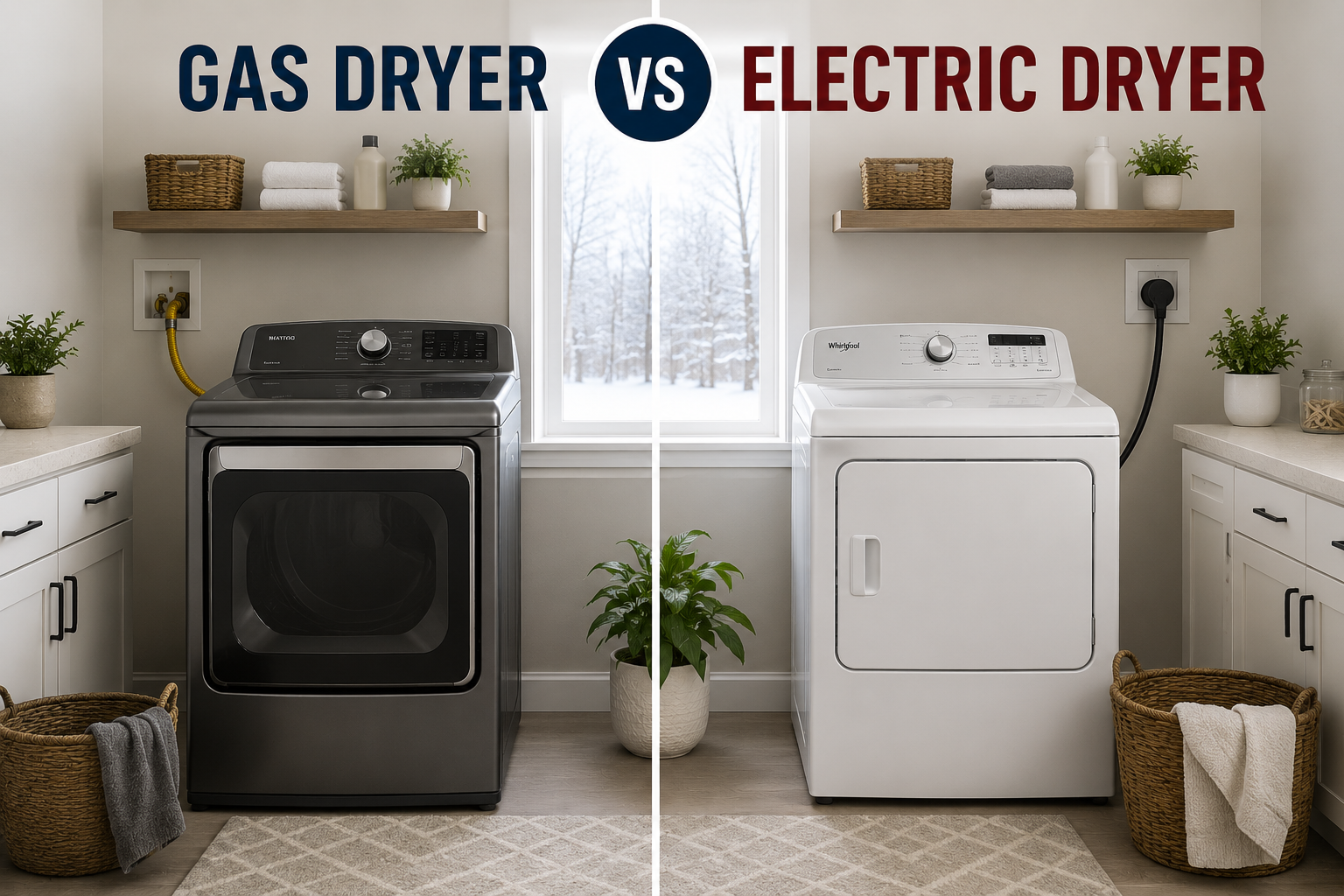
Choosing a new dryer can be confusing. Many homeowners ask: "Should I buy a gas dryer or an electric dryer?"
Both gas and electric dryers are excellent options, but they work differently. The right choice depends on your home's setup, available connections, laundry needs, and budget.
For Minnesota homeowners, where indoor laundry is important throughout the year, selecting the right dryer can improve convenience, efficiency, and long-term value.
- The difference between gas and electric dryers
- Pros and cons of each option
- Installation requirements
- Which dryer may be the best choice for your home
What Is a Gas Dryer?
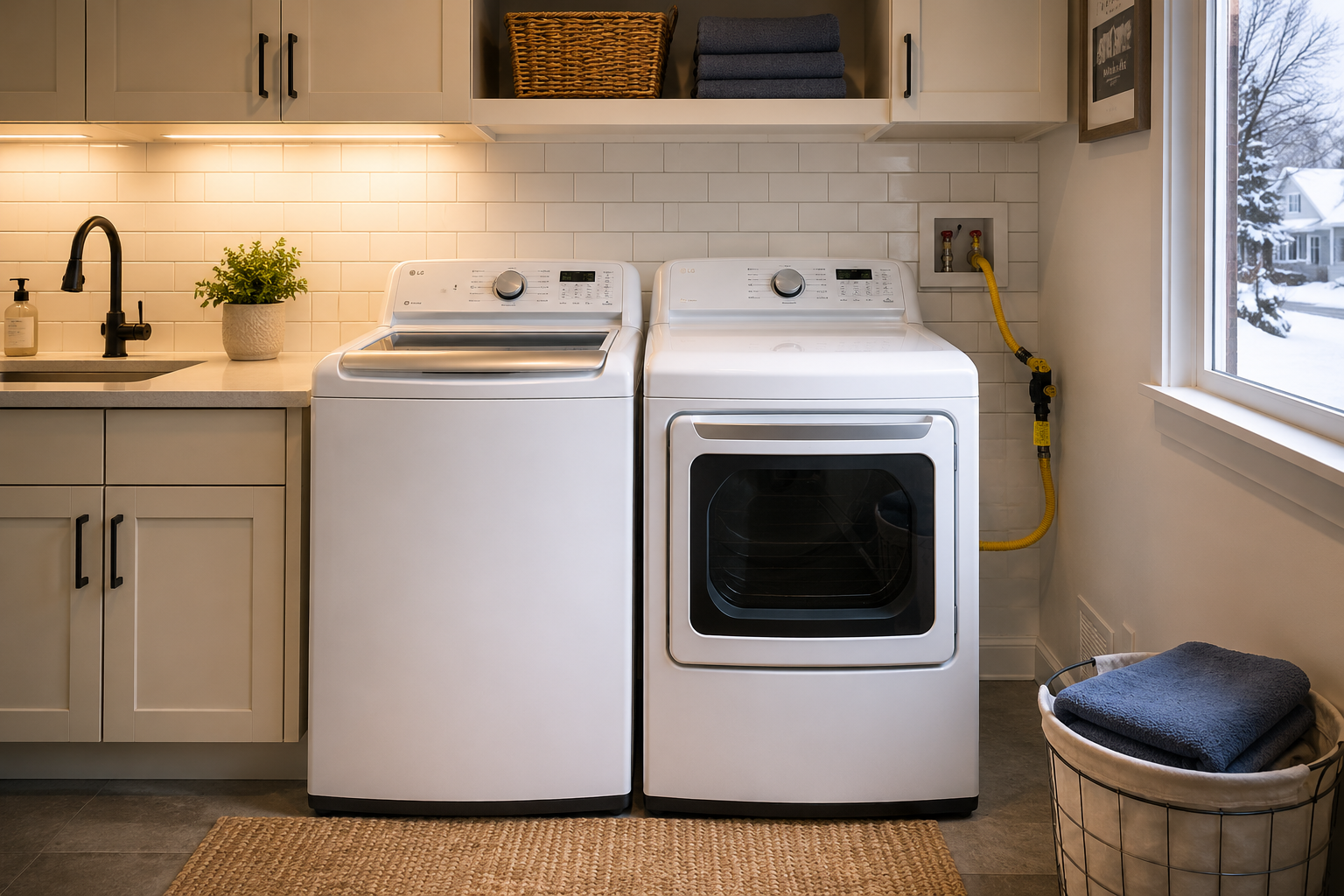
A gas dryer uses natural gas or propane to create heat while electricity powers the controls, drum, sensors, and other functions.
Many Minnesota homes already have natural gas service, making gas dryers a popular choice for homeowners who want efficient drying performance.
Benefits of a Gas Dryer
|
✓ Faster Heating Gas dryers can heat up quickly, which may help reduce drying time for towels, bedding, and heavier clothing. |
|
✓ Lower Operating Cost Depending on local utility rates, gas dryers may cost less to operate over time. |
|
✓ Great for Large Families Families with frequent laundry loads may appreciate faster drying performance. |
Gas Dryer Cons
|
Requires Gas Connection: Homes without an existing gas line may require additional installation work. |
|
Higher Installation Cost: Professional gas installation may increase upfront expenses. |
|
Limited Placement: Not every laundry area has access to a gas connection. |
What Is an Electric Dryer?
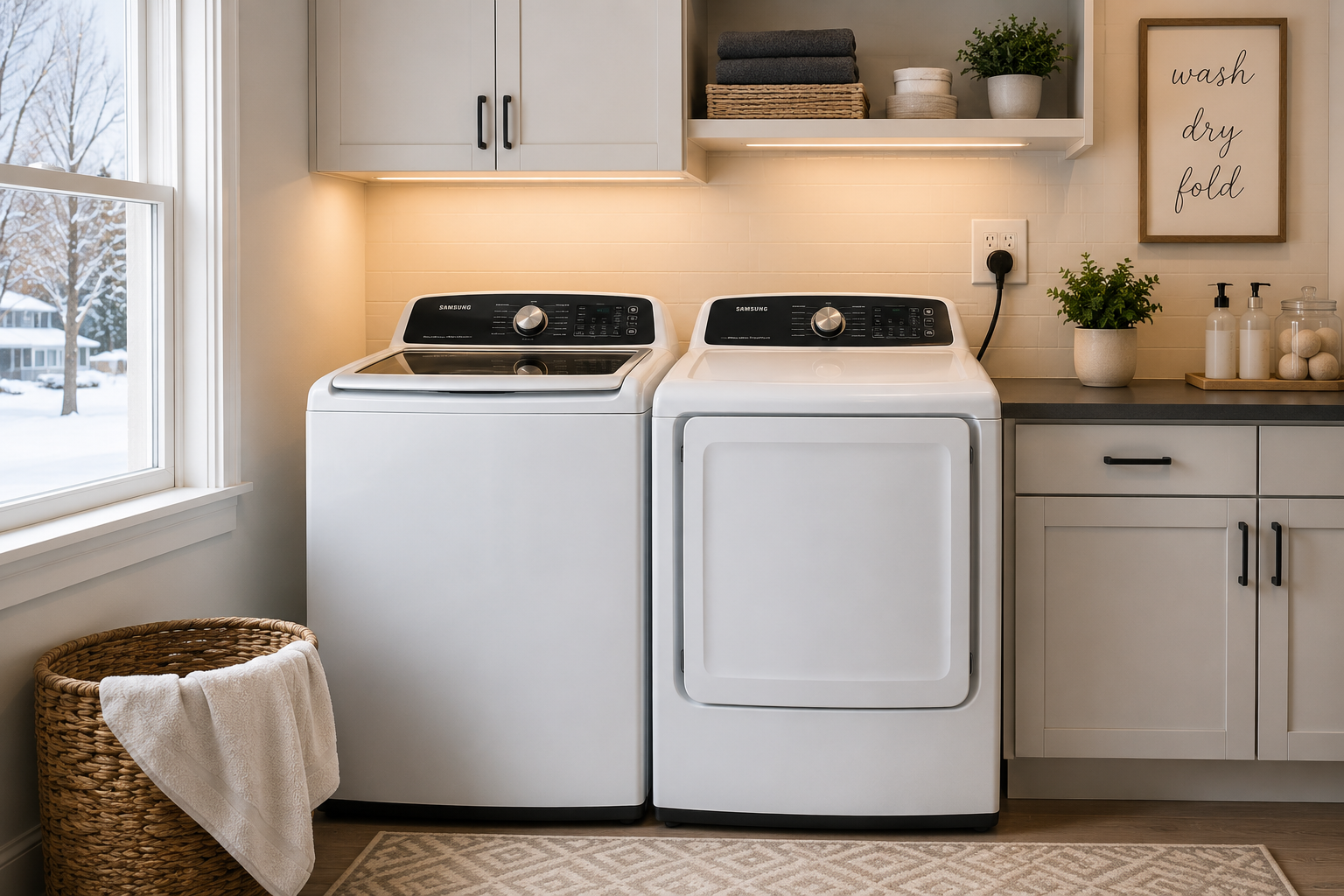
An electric dryer uses electricity to power a heating element that dries your clothes.
Electric dryers are one of the most common choices because they are easy to install and work well in most homes.
Benefits of an Electric Dryer
|
✓ Easier Installation Electric dryers do not require a gas connection, making installation simpler. |
|
✓ Lower Initial Cost Electric dryers are often more affordable upfront. |
|
✓ More Flexible Works well for homes without natural gas service. |
Electric Dryer Cons
|
Higher Energy Usage: Electric heating may use more electricity depending on local rates. |
|
Possible Longer Drying Time: Some models may take slightly longer compared with gas dryers. |
Gas Dryer vs Electric Dryer Comparison
| Feature | Gas Dryer | Electric Dryer |
|---|---|---|
| Heat Source | Natural Gas / Propane | Electricity |
| Installation | Requires Existing Gas Connection | Easier Installation |
| Initial Cost | Usually Higher | Usually Lower |
| Best For | Homes With Existing Gas Access | Most Laundry Rooms |
Which Dryer Should Minnesota Homeowners Choose?
Choose a Gas Dryer If:
- Your home already has a gas connection
- You want faster heating performance
- You frequently wash larger loads
- You want potentially lower long-term operating costs
Choose an Electric Dryer If:
- You want easier installation
- Your home does not have gas access
- You prefer a lower upfront cost
- You want more flexibility in dryer placement
Dryer Buying Tips Before You Purchase
- Measure Your Space: Check width, height, depth, and door clearance before purchasing a new dryer.
- Check Your Connection: Confirm whether your home uses a gas hookup or a 240V electric dryer connection.
- Select the Right Capacity: 7.0 cu. ft. dryers work well for everyday households, while larger families may prefer 7.5+ cu. ft. models.
- Consider Features: Look for sensor drying, steam options, wrinkle prevention, and energy-saving features.
Frequently Asked Questions About Gas and Electric Dryers
What are the main differences between gas and electric dryers?
Gas dryers use natural gas or propane to create heat, while electric dryers use electricity to power a heating element. Both provide reliable drying performance, but the best choice depends on your home's available connections, installation requirements, and laundry needs.
Do gas dryers dry clothes faster than electric dryers?
Gas dryers can heat up faster and may reduce drying time for larger loads. However, drying performance also depends on the dryer model, load size, ventilation, and selected cycle settings.
Do gas dryers require electricity?
Yes. Gas dryers still require electricity to operate the drum, controls, sensors, and other features. The gas is only used as the heat source.
Which dryer is better for Minnesota homes?
Both gas and electric dryers work well in Minnesota homes. A gas dryer may be a good choice if your home already has a gas connection, while an electric dryer may be better for homes that want easier installation.
How much space do I need for a dryer installation?
Before purchasing a dryer, measure the width, height, depth, and door clearance of your laundry area. This helps ensure your new dryer fits properly in your home.
How long does a dryer usually last?
Most dryers can last around 10 to 13 years with regular maintenance, proper cleaning, and correct installation.
Need Help Choosing the Right Dryer?
Our appliance experts can help you compare gas and electric dryers and find the best option for your Minnesota home.
Shop dryers today or contact our team for assistance.